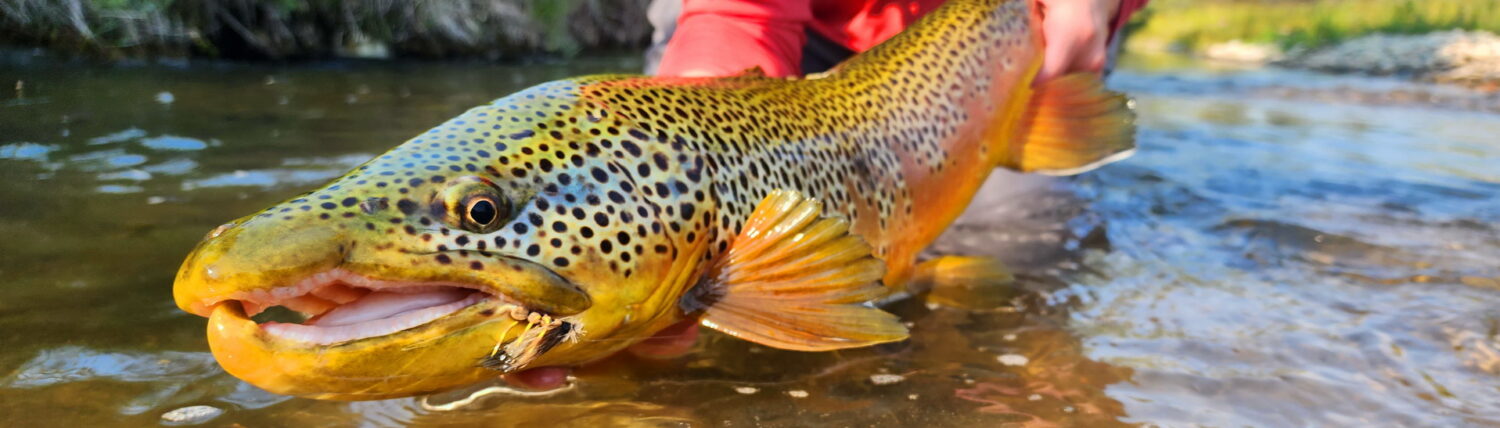
NEW! DAVE’S FLY BOX: “BEETLES”

At first blush most fly fishers consider beetles a peak summer food source on trout streams. Nothing could be further from the truth. In this video we look at the opportunities beetles present through considerably more of a trout season than given credit to.
In “Dave’s Fly Box: Beetles”, we look into the few patterns and the slight variances and sizes we both use. We do an in-depth look at how we arrived at our collection of flies, from observations of insect activity to simple fly patterns to trout behavioural responses in varying weather and water conditions.
This is it. Nothing more. About a dozen patterns that come in different colors & sizes. This video relies on your understanding of the lateral line as well as our ongoing consistency in approach and presentation with the gear setup – all basics to our Trout Streams Master-Course collection (use the search function here for these videos).
What this video aims to do is keep the core of the essentials and spirit of beetle events to simplicity, so you can hit the water and catch fish. The subtle points about matching / considering size and materials to the water type and fish behaviour are critical, particularly on pressured fisheries where maybe a little more techy stuff is needed – but honing your approach & presentation will garner far more noticeable result than a fly pattern.
This fly box is 100% simple and effective. The triggers, the movement, the knowing when & where… are all simple during beetle season – late spring through fall. We keep things succinct.
What You Will Learn:
- How simple observations led to origins of patterns
- How simple observations led to season awareness
- How tying in and understanding the lateral line will dictate what waters various patterns can work for or AGAINST you
- Trout behaviour observations drive what you can get away with – critical in terrestrial fishing
- Observing regional beetles & terrestrials will lead to subtle color or size considerations
- Matching size and weight of foam patterns to conditions & water types
- Hook gap considerations
- Where and why certain use of materials or LACK of materials are chosen
- How experience with other bugs in nature helped to shape my beetle box
- What I often prefer to use when both beetles and hoppers are present in the environment
- Having a few different & unique patterns can be extremely helpful when dealing with refusals during guided travel & why
- The variety of natural bugs some patterns can and do represent
- One pattern that I did not create that we’ve used a lot in North America through the years
JOIN OUR DIGITAL MEMBERSHIP TO GAIN ACCESS TO THE FULL BEETLES FLY BOX PRESENTATION