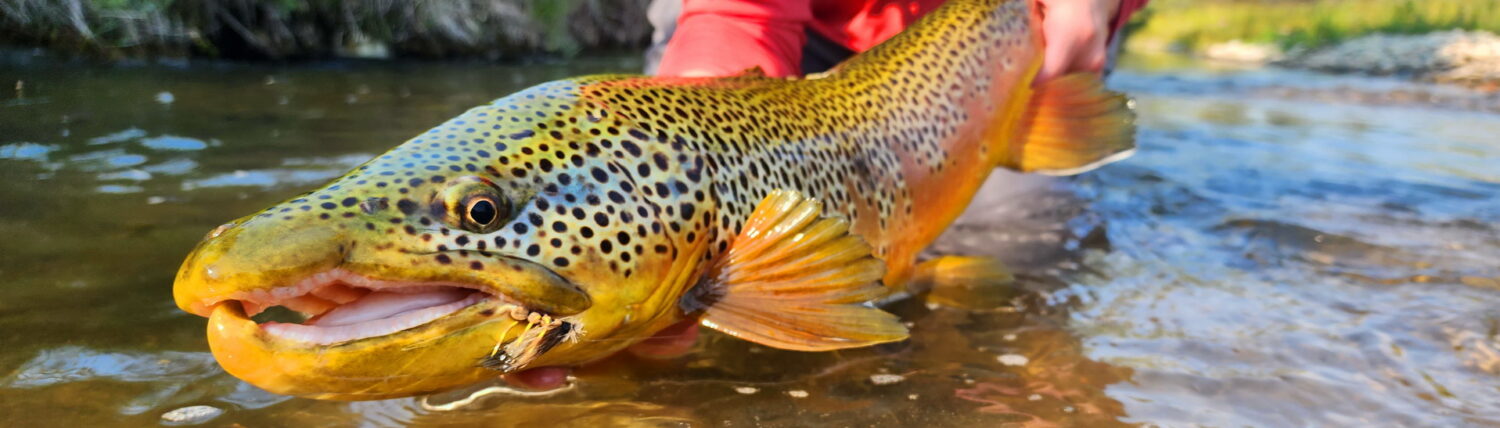
NEW Feature Video “Summer POV”
We wanted to share an authentic bit of sight-fishing during challenging conditions in Alberta, Canada. Prolonged hot, sunny weather, no insect hatches of any consequence, little in the way of trout activity.
Perfect for filming. Yeah. Nah.
Unless, of course, that is exactly the point.
We’ve been told by a lot of people that we make it look too easy. In that regard we’ve always focused on the process of approach, position, casting and line control, etc in relation to the trout behaviour once that specific trout is located. Of course, locating the fish in through sighting it subsurface or a rise. And, of course, so many people have replied to us “I can’t do that on my river because ____”. In some rare instances that is true, however, even in 2 feet of clarity trout can be located visually. This all points to exactly what this video is about. The time it takes to locate trout. A trout. One trout.
One.
All that matters is that one fish. Once found, we take the time to note landmarks, features on shore, stream features, etc in tracking what to look for at water level as the angler. Through decades experience, we know that the view from the river is massively different than from up high. The communication from up high helps but it’s not exclusive to success. Even if a fish is observed moving a shoreline, up and down 10 to 30 feet, once located you at least know the zone and can plan to adjust the hookset angle or casting location and angle as you prospect the cycle/cruise zone.
But it takes time to find that one fish. And as often as a known hot spot or feature trout lie has a fish, the next visit it will not – even the best lies don’t always have fish because… conditions and circumstance.
We share this video and the incredible fish landed as a reminder of what it takes, the time and concerted focus. So many people get skunked on this reach of water and so many more in perpetuated conditions similar to this on so many waters despite how intensely they prospect the water with hoppers, droppers, deep nymphs, streamers… and maybe a few trout are moved so many go home skunked on challenging, low population brown trout waters such as this. These exact conditions hit New Zealand and Patagonia mid January through March annually and are typical of western N America mid/late July through Sept.
